Narita Tokyo airport (NRT)

Content written by
German Giudici
.
Creator of the Aeropuertos del Mundo website network since 2007.
Location details, contact information, airlines, departure and arrival flight status, transportation, facilities and services, parking, special passenger amenities, nearby hotels and answers to passengers' frequently asked questions.
Passenger Guide
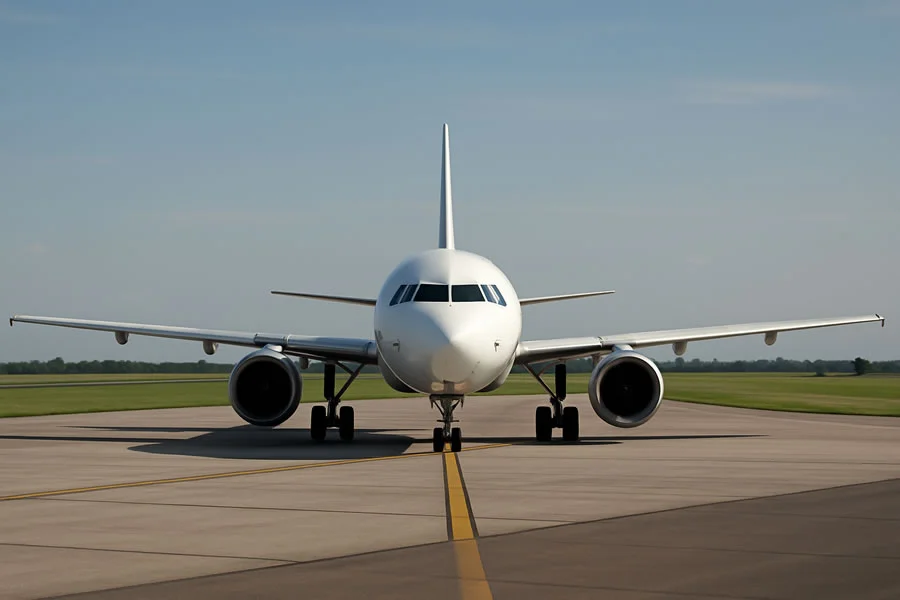
Narita International Airport (NRT), opened on 20 May 1978, is Japan's main international gateway and the country's second busiest airport. It serves as the most important hub for Japan Airlines and All Nippon Airways. It operates domestic and international flights to destinations across Asia, Europe, Oceania, the Middle East, North America and Africa. Among its most prominent non-stop routes are Madrid, Amsterdam, Helsinki, Zurich, Houston, San Francisco, Los Angeles and Vancouver.
Official Website: narita-airport.jp
Telephone: +81 476 34 8000
Terminals
The airport has three passenger terminals, operating 24 hours a day. It is essential to check which terminal your flight departs from, as the distances between them are considerable:
- Terminal 1: Divided into North and South Wings, it mainly handles flights operated by SkyTeam and Star Alliance member airlines.
- Terminal 2: Primarily used by Oneworld member airlines and other scheduled international carriers.
- Terminal 3: Dedicated exclusively to low-cost carriers (LCCs).
Inter-terminal connection: A free shuttle bus service links the three terminals between 5:00 am and 11:00 pm, with frequencies ranging from 7 to 20 minutes depending on the time of day. In addition, Terminals 2 and 3 are connected by a covered pedestrian walkway (approx. 500 metres).
Annual traffic (2025): 42.3 million passengers.
Information Desks
Information counters are strategically located throughout all terminals, both in the departures and arrivals areas. In addition, the airport features visitor service centres on the first floor of Terminals 1 and 2, generally open from 8:00 am to 8:00 pm, where comprehensive tourist assistance is provided.
Location
The airport is located in Narita, Chiba Prefecture, 60 km (39 miles) east of Tokyo.
See MapParking services at Narita Tokyo airport (NRT)
The airport provides extensive parking facilities that are open 24 hours a day and distributed to serve its three terminals. The five main areas (P1, P2, P3, P5 and the cargo area) offer options for both short- and long-term stays, with security systems and continuous monitoring.
Location and Access
- Terminal 1: Car parks P1 and P5 are the most conveniently located. P1 is a multi-storey facility directly connected to the main terminal building, while P5 is situated at the southern end.
- Terminals 2 and 3: The use of P2 and P3 is recommended. P2 is a high-capacity complex (with North and South sections) linked to Terminal 2. Passengers using Terminal 3 are advised to park in P2 or P3 and continue on foot or by means of the free shuttle bus.
Pricing and Reservations
Parking charges are calculated in 24-hour periods, with substantial discounts from the sixth day onwards. Payment can be made in cash, by credit card or using IC transport cards (Suica, Pasmo, etc.).
Reservations: It is possible to reserve spaces in advance for the P2 and P5 car parks through their respective official websites, which is strongly recommended during holiday periods and public holidays.
Disability Discount: A 50% reduction on the total parking fee is available for vehicles transporting passengers with disabilities, upon presentation of the relevant documentation at the exit booths or via the intercom system at the automatic payment machines.
Special Services
- Electric vehicle charging: Fast and standard charging stations are available on level 1 of P1 and P5, and on level 4 of P2.
- Motorcycles: Dedicated and clearly marked parking areas are available in P1 and P2.
Check the full table of parking rates and real-time availability
Facilities for passengers with special needs
Narita Airport is designed to be fully accessible, complying with international universal design standards to ensure a smooth experience for passengers with reduced mobility, sensory impairments, elderly travellers and families with young children. It is always advisable to contact your airline at least 48 hours in advance to arrange any specific assistance services required during boarding and the flight.
Mobility Assistance
The airport offers a wide range of facilities to make it easier for passengers to move around:
- Wheelchairs: Available free of charge at all airport information desks. They may be used in public areas and taken to the boarding gate (subject to prior coordination with the airline).
- Electric vehicles: In Terminals 1 and 2, an electric buggy service ("Passenger Support") is available to assist passengers who have difficulty walking long distances within the international departures and arrivals areas.
- Infrastructure: The airport is equipped with ramps, appropriately sized lifts, moving walkways and low-height telephones.
- Parking: Reserved parking spaces for disabled passengers are available in the P1, P2, P3 and P5 car parks. In addition, holders of disability certificates are entitled to a 50% discount on parking fees.
Visual and Hearing Impairments
To ensure the safety and independence of all passengers, the following measures have been implemented:
- Tactile paving: Tactile guidance blocks (yellow paving) are installed throughout all terminals to guide visually impaired passengers to key locations such as toilets, lifts and service counters.
- Braille: Available on information panels, lift buttons, stair handrails and directory guides.
- Induction loop systems: Installed at various information counters and waiting areas to improve sound clarity for hearing aid users.
Assistance Dogs
The airport allows access for guide dogs, hearing dogs and service dogs. Dedicated relief areas for assistance animals are located both before and after security screening in all three terminals. These areas are equipped with appropriate sanitary facilities for the animals.
Other Services
Accessible toilets: Available throughout the airport and designed as "multi-purpose toilets", allowing wheelchair access and equipped with ostomy care facilities and changing tables.
Latest updates: June 12, 2026
 Airports in Japan