

Last updated: October 2026
Missing or wrong documents are one of the main reasons passengers are denied boarding. The airline checks your papers before you fly, because it must fly you back at its own cost if your destination refuses you entry. This guide explains which documents you need, how check-in and boarding work, and the most common problems.
Documents you need to fly
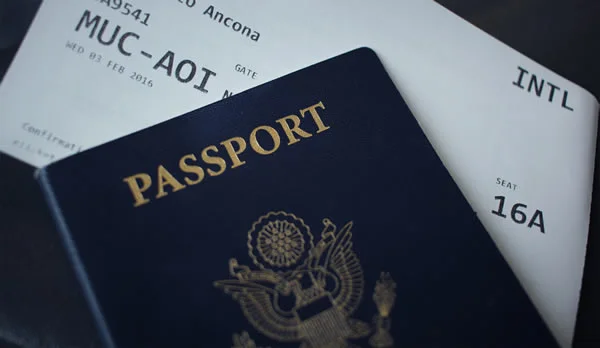
- Identity document, valid on the day of travel. For international flights this is your passport, with the exceptions below.
- Booking reference and boarding pass, printed or on your phone.
- Visa or electronic travel authorization if your destination requires one (for example ESTA for the United States, eTA for Canada or ETA for the United Kingdom).
- Return or onward ticket, which many countries and airlines ask for.
- Other documents depending on the case: parental consent for minors, vaccination certificate, residence permit.
Which ID is accepted
- Domestic flights: usually your national ID card or passport. In the United States, since May 2025 you need a REAL ID–compliant driver's license or another accepted ID, such as a passport.
- Within the EU and Schengen: EU citizens can travel with their national ID card.
- Within South America: citizens of Mercosur and associated countries can travel between them with their national ID card instead of a passport. Check which countries and documents are accepted before you go.
- Everywhere else: passport.
- If you have two nationalities, book and travel with the same passport, and enter each country with the passport it requires.
Passport validity
- Many countries require your passport to be valid for at least 6 months after you arrive.
- The Schengen area requires at least 3 months of validity after the day you plan to leave, and a passport issued within the last 10 years.
- Some countries also ask for one or two blank pages for stamps.
- A damaged passport (torn pages, water damage, a broken chip) can be refused. Renew it before you travel.
Transit: when you connect in another country
- Even if you do not leave the airport, some countries require a visa or authorization to connect. The United States and Canada have no international transit areas: you need an ESTA or visa (US) or an eTA or visa (Canada) just to connect.
- In other countries it depends on your nationality and whether you change airports or collect your bags.
- If your connection is on a separate ticket, you will usually need to enter the country to collect your bags and check in again.
Check-in and boarding: step by step
- Check in online, usually from 24 to 48 hours before departure. On international flights you may need to enter your passport details (Advance Passenger Information).
- Arrive at the airport in time: about 2 hours before domestic flights and 3 hours before international ones, more at large airports and in peak season. Check the security wait times on each airport's page.
- Drop your bags at the airline counter or self-service kiosk. Check-in counters usually close 45 to 60 minutes before international departures.
- Security control, then passport control on international departures.
- Go to the gate early: boarding usually starts 30 to 45 minutes before departure, and the gate usually closes 15 to 20 minutes before. After that, you can be refused boarding even if you checked in.
Times vary by airline and airport. Always check the times on your booking.
Traveling with minors
- Children need their own passport or ID, even babies.
- If a child travels with only one parent, with other relatives or alone, many countries require a notarized consent letter from the absent parent or parents. Argentina and other Latin American countries are strict about this; the United States recommends it.
- Unaccompanied minors usually need the airline's escort service, booked in advance.
- Carry the child's birth certificate if your surnames are different.
Cash and valuables
- When entering or leaving the European Union with €10,000 or more in cash, and the United States with US$10,000 or more, you must declare it. Other countries set their own limits.
- Carry a credit or debit card that works abroad, and some cash in local currency for the first expenses.
- Tell your bank you are traveling if it requires it.
Why you can be denied boarding
- Passport expired, too close to expiry or damaged.
- No visa or electronic authorization for the destination or the transit country.
- The name on the ticket does not match the passport.
- No return or onward ticket when the destination requires one.
- Arriving at the counter or the gate after it closed.
Airlines check entry rules in an international database (IATA Timatic). You can check the same rules for your trip in the IATA Travel Centre.
Also useful: Immigration and customs control and Before you fly checklist.
Official sources
- IATA Travel Centre – Passport, visa and health requirements
- US Department of State – International travel
- TSA – REAL ID
- European Union – Travel documents
This guide is general information. Entry requirements depend on your nationality and change often; check the official sources and your airline before you travel.