

Last updated: October 2026
Baggage rules depend on the airline, the fare and the route, and they change often. Knowing them before you pack avoids paying extra fees at the airport or having items confiscated at security. This guide covers allowances, what can and cannot go in each bag, batteries, liquids and what to do if something goes wrong.
Types of baggage
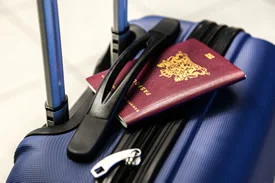
- Personal item: a small bag, backpack or laptop bag that fits under the seat in front of you. Included in almost all fares.
- Carry-on (cabin bag): a small suitcase for the overhead bin. Usually about 55 × 40 × 20–23 cm and 7 to 10 kg, but it varies by airline. Many basic and low-cost fares do not include it.
- Checked baggage: goes in the hold. On international flights, typically one or two pieces of 23 kg each in economy; on many domestic and low-cost fares it is paid separately.
Always check your booking: the allowance is set by your fare, not just the airline. A reform of EU passenger rights agreed in 2026 includes rules on free hand luggage, but it has not taken effect yet.
Excess and extra baggage
- Bags over the weight or size limit, or extra pieces, are charged a fee. Adding them online before the flight is usually much cheaper than paying at the airport.
- Most airlines do not accept single bags over 32 kg, for staff safety. Heavier items must go as cargo.
- Sports equipment (bicycles, golf clubs, skis, surfboards) and musical instruments usually have their own rules and fees. Book them in advance.
- Weigh your bags at home: a portable luggage scale costs little and avoids surprises.
What should never go in checked baggage
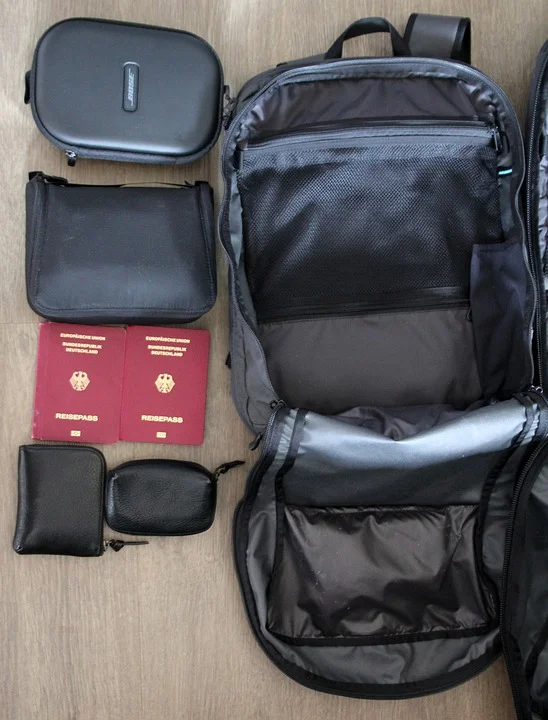
- Power banks, spare lithium batteries and e-cigarettes: they are only allowed in the cabin, because of the fire risk.
- Medicines, travel documents, keys, cash, jewelry and valuable electronics: airlines limit or exclude their liability for these items.
- A change of clothes and basic toiletries are worth carrying in your cabin bag, in case your checked bag is delayed.
Lithium batteries and power banks
- Phones, laptops, tablets and cameras can travel in the cabin. If you put a laptop in checked baggage, it must be fully switched off, but carrying it in the cabin is safer.
- Power banks and spare batteries go only in your cabin bag, with the terminals protected (original packaging, tape or a case).
- Up to 100 Wh per battery: allowed. From 100 to 160 Wh: only with airline approval. Over 160 Wh: not allowed in passenger baggage. Check the Wh rating printed on the battery.
- Since March 2026, under new international rules (ICAO), passengers can carry a maximum of two power banks, and charging power banks on board is not allowed. Many airlines go further and ban using them during the flight at all.
- If a device overheats or smokes on board, tell the crew immediately.
Liquids and security control
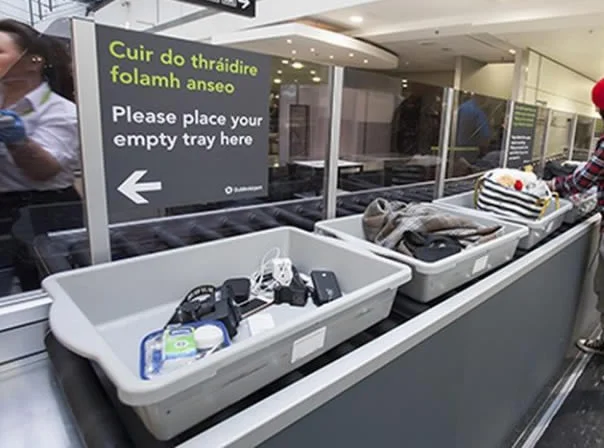
- The general rule: liquids, gels, creams and aerosols in the cabin bag must be in containers of up to 100 ml (3.4 oz), all in one clear, resealable bag of about 1 liter.
- Airports with new CT scanners: some airports in Europe and the UK now allow containers of up to 2 liters and let you leave liquids and laptops in the bag, for example London Heathrow and Gatwick, Dublin or Rome Fiumicino. But there is no single rule: it depends on the airport, and even the terminal or lane. Other airports still apply the 100 ml limit.
- Plan for the strictest airport on your route, including the return trip and any connection where you pass security again.
- In the United States, the 3-1-1 rule (3.4 oz containers in one quart-size bag) still applies at TSA checkpoints.
- Exempt: baby food and milk, and medically necessary liquids. Tell the security staff and show them separately.
- Duty-free liquids bought after security are allowed if they stay sealed in the shop's security bag (STEB) with the receipt, especially if you have a connection.
Prohibited and restricted items
- Never allowed: explosives, fireworks, flammable liquids and gases, toxic or corrosive substances.
- Not in the cabin: knives (rules on small blades vary by country), scissors with long blades, tools, sports bats and clubs, and items that look like weapons.
- Firearms and ammunition: only in checked baggage, declared to the airline in advance, unloaded and in a locked hard case, with the permits required by each country.
- When in doubt, check the airport or security agency website (TSA in the US, the airport or national authority elsewhere).
Food in your luggage
- At security: solid food (sandwiches, fruit, snacks) is allowed in the cabin. Spreadable or liquid foods, such as yogurt, jam, honey, sauces or soups, count as liquids.
- At your destination: many countries ban fresh food, meat or dairy, even in sealed packaging. See what you can bring in our guide to immigration and customs control.
Pets
- Small pets can often travel in the cabin in an approved carrier under the seat, within a combined weight limit (often 8 kg including the carrier). Larger animals go in the hold or as cargo.
- Space is limited: book the pet with the airline when you buy your ticket.
- Check the entry rules of the destination: microchip, rabies vaccination, health certificate and sometimes quarantine.
- Some airlines do not carry snub-nosed breeds in the hold, or any animals in the hold in very hot weather.
If your bag is delayed, damaged or lost
- Report it at the airline's baggage desk before leaving the baggage hall and keep the report (PIR).
- Keep receipts for essential purchases while you wait.
- Send a written claim to the airline within the deadlines: 7 days for damage and 21 days for delay on international flights.
See the full process and compensation limits in our guide to claims for delays, cancellations and baggage.
Practical tips
- Put your name, phone and email inside and outside each bag.
- A tracking tag (such as an AirTag or similar) helps you and the airline locate a delayed bag.
- Take a photo of your bag and its contents before checking it in.
- Never carry bags or packages for other people, and never leave your luggage unattended.
- Use TSA-approved locks if you fly to or within the United States; other locks may be cut open.
Official sources
- FAA PackSafe – Lithium batteries
- TSA – What can I bring?
- UK Government – Hand luggage restrictions
- IATA – Baggage
This guide is general information. Allowances and security rules depend on each airline and airport: check them before you travel.