Istanbul airport (IST)

Content written by
German Giudici
.
Creator of the Aeropuertos del Mundo website network since 2007.
Location details, contact information, airlines, departure and arrival flight status, transportation, facilities and services, parking, special passenger amenities, nearby hotels and answers to passengers' frequently asked questions.
Passenger Guide
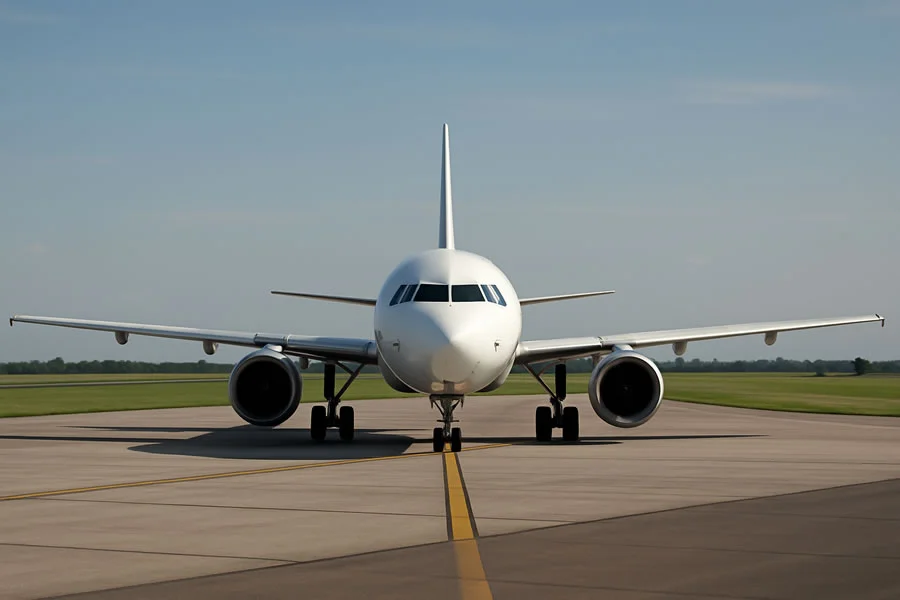
Istanbul Airport (IST), located in the Arnavutköy district, is Turkey’s main air terminal and one of the most important global connection hubs. Opened on 29 October 2018, it began full-capacity operations on 7 April 2019, replacing the former Atatürk Airport. The complex was designed to be one of the largest in the world, with a projected final capacity of up to 200 million passengers per year. It stands out for its modern architecture and its single terminal under one roof, the largest of its kind globally.
Official Website: istairport.com
Phone / WhatsApp: +90 444 1 442
Terminals
The airport operates with a single massive passenger terminal, open 24 hours a day and considered the largest in the world under one roof. It is divided into several boarding areas:
- Areas A, B, D and F: Mainly designated for international flights.
- Area G: Located in the south-east sector, it is exclusively dedicated to domestic flights.
- Areas C and E: Directly integrated into the central block of the main terminal.
Annual Traffic (2025): 84.5 million passengers.
Information Points
Information desks are located throughout the arrivals and departures levels. You will find assistance staff and tourist information points in the arrivals hall and in the international boarding area to help with enquiries about procedures, transport and airport services.
Mobile App: The official "IGA Istanbul Airport" app offers an interactive map, flight tracking, a virtual assistant and vehicle location in the car park.
Location
The airport is situated at the junction of the roads to Arnavutköy, Göktürk and Catalca, and between the Black Sea coastal towns of Yeniköy, Tayakadin and Akpinar. It is located 35 km (22 miles) north-west of the city of Istanbul.
See MapParking services at Istanbul airport (IST)
The airport features the largest covered car park complex in the world under a single structure, with a capacity of 40,000 vehicles. The system is equipped with smart guidance technology, real-time occupancy indicators and the “Find My Car” function available via the iGA mobile app, allowing users to locate their vehicle using the licence plate.
Structure and Sections
The car park is organised into five multi-level blocks identified by colours, providing direct access to different areas of the terminal:
- Blocks: Turquoise, Green, Yellow, Red and Blue.
- Levels: Each block has five levels (P1 to P5).
- Accessibility: Dedicated spaces for passengers with reduced mobility are available in all blocks, located near lifts and terminal access points.
Valet Parking Service
For added convenience, the airport offers a valet parking service with trained staff. The contact points are:
- Drop-off points (Departures level): Located in front of Gate 1 (Domestic Terminal) and in front of Gates 3 and 7 (International Terminal).
- Pick-up points (Arrivals level): Vehicle collection takes place at the designated points in the Arrivals Plaza after payment at the valet offices.
Value-Added Services
Within the complex, users can access additional services for vehicle care:
- Maintenance and detailing: Professional car wash, tyre replacement and balancing, and light maintenance services.
- Electric charging: Charging stations for electric vehicles (ZES) distributed at strategic points in the car parks.
- Security: Comprehensive 24-hour monitoring via closed-circuit television (CCTV) and preventive patrols.
Fees and Payments: Payment can be made at automated kiosks, manual offices or via the app. You can check the latest prices on the official parking page.
Facilities for passengers with special needs
Istanbul Airport stands out for its inclusive infrastructure and comprehensive assistance programme, designed to ensure a smooth experience for all travellers, regardless of physical ability, age or sensory needs.
Accessibility and the iGA Cares Programme
Under the concept of a “barrier-free airport”, the terminal offers specialised services for passengers with reduced mobility or visual and hearing impairments:
- Mobility assistance: Free wheelchairs and escort staff are available from the entrance to the boarding gate. It is recommended to request this service via the airline at least 48 hours in advance.
- Hidden disabilities: The airport uses the Sunflower Lanyard for passengers with autism, dementia or anxiety, allowing staff to discreetly identify those who may require more time or support.
- “Very Special Guest” rooms: Quiet spaces specifically designed for passengers with high sensory sensitivity or autism, located before and after security checks.
- Assisted navigation: Tactile flooring (tactile paving) is available throughout the terminal, as well as the “Loud Steps” mobile app providing voice assistance for visually impaired passengers.
Families and Children
The airport offers a “kid-friendly” environment with free services to make travelling with children easier:
- Pushchairs: Available free of charge after passport control for use up to the boarding gate.
- Baby changing rooms: Private areas equipped with changing facilities and nursing chairs.
- Play areas: Themed children’s zones in the boarding areas.
- Family fast track: Priority access at security and passport control for families with young children.
Elderly Passengers
As part of the “Age-Friendly” programme, passengers over 65 benefit from exclusive advantages:
- Free Fast Track: Priority access at security and passport control for passengers over 65.
- Buggy service: Free transport in electric vehicles along designated routes within the terminal.
Travelling with Pets
The airport is fully “pet-friendly” and offers facilities for animal welfare:
- Relief areas: Spaces equipped with artificial grass, water fountains and cleaning bags, located both in the departures level and in the transit area.
- Pet rooms: Dedicated resting spaces where animals can be outside their carriers in a safe environment.
Latest updates: March 30, 2026
 Airports in Turkey