

Last updated: October 2026
Landing is only half the journey: you still have to get through passport control, collect your bags, pass customs and find your way into the city. This guide follows that order and tells you what to do if something goes wrong.
1. Before leaving the plane
- Check the seat pocket, the floor and the overhead bin: phones, glasses and passports are the most common forgotten items.
- If you have a connection, check your next gate in the airline app or on the screens as soon as you land.
- If you have an arrival form or a digital entry QR code, have it ready before you reach the hall.
2. Immigration control
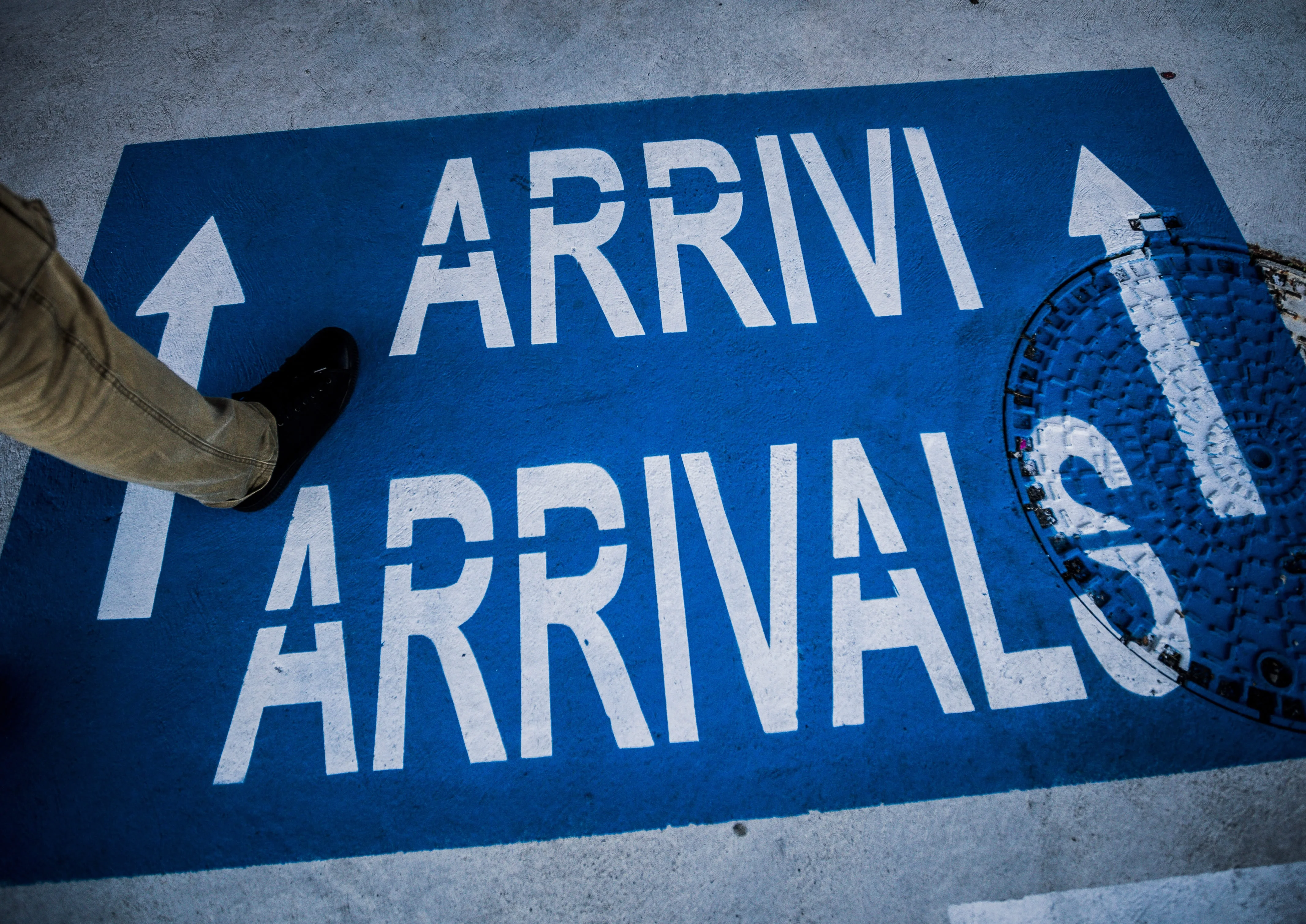
- Follow the signs to "Arrivals" or "Passport control". There are usually separate lines for local citizens, other nationalities and, in some countries, e-gates.
- E-gates work for chip passports of certain nationalities. Children often must use the staffed desks.
- In the Schengen area, non-EU travelers register face and fingerprints in the Entry/Exit System (EES) on their first entry. It takes longer the first time.
- Have your passport, return ticket and accommodation details ready. Answer briefly and truthfully.
- More in immigration and customs control.
3. Baggage claim
- Find your carousel on the screens, using your flight number.
- A tracker (AirTag, SmartTag, Tile) inside the bag tells you if it arrived.
- Check your bag for damage before leaving the hall.
- If your bag is missing or damaged, report it at the airline's baggage desk before leaving the baggage hall and keep the report (PIR). You will need it to claim: see claims for delays and baggage.
4. Customs
- Green channel if you have nothing to declare; red channel if you carry goods over the allowance, large amounts of cash or restricted items.
- Some countries now use online customs declarations with a QR code; others still use paper forms.
- Food is the most common problem: many countries ban fresh food, meat and dairy, and fine undeclared items. If in doubt, declare.
5. Connectivity and money
- An eSIM installed before the trip works as soon as you land. Airport Wi-Fi is usually free, sometimes with a time limit or registration.
- Airport currency exchange counters usually have poor rates. Withdraw a small amount from an ATM inside the terminal, or pay by card.
- If an ATM or card terminal offers to charge you in your own currency, decline: the exchange rate is usually worse.
6. Getting to the city
- Check the transport options on your airport's page on this site: trains, buses, shuttles, taxis and car rental.
- Ignore people offering taxis inside the terminal. Use the official taxi rank, a prepaid taxi counter or the ride-app pickup area.
- Save your hotel address in the local language to show the driver.
- Late arrival? Check whether public transport still runs, or book a transfer or an airport hotel in advance.
If you have a connection
- On a single ticket, international connections often mean a transfer security check, and sometimes passport control.
- In the United States and Canada you always pass immigration and customs at your first airport and must collect and re-check your bags.
- Use the connection calculator on your airport's page to check if your layover is enough.
Forgot something on the plane?
- If you are still in the arrivals area, tell airline staff right away; sometimes they can go back to the aircraft.
- Once you have left, use the airline's lost-and-found form, or the airport's Lost & Found office for items lost in the terminal.
 Airport Finder Widget
 Before flying
 Guide to airport lounges
 TSA and Checked Baggage in 2026