Seattle Tacoma airport (SEA)
Location details, contact information, airlines, departure and arrival flight status, transportation, facilities and services, parking, special passenger amenities, nearby hotels and answers to passengers' frequently asked questions.
Passenger Guide
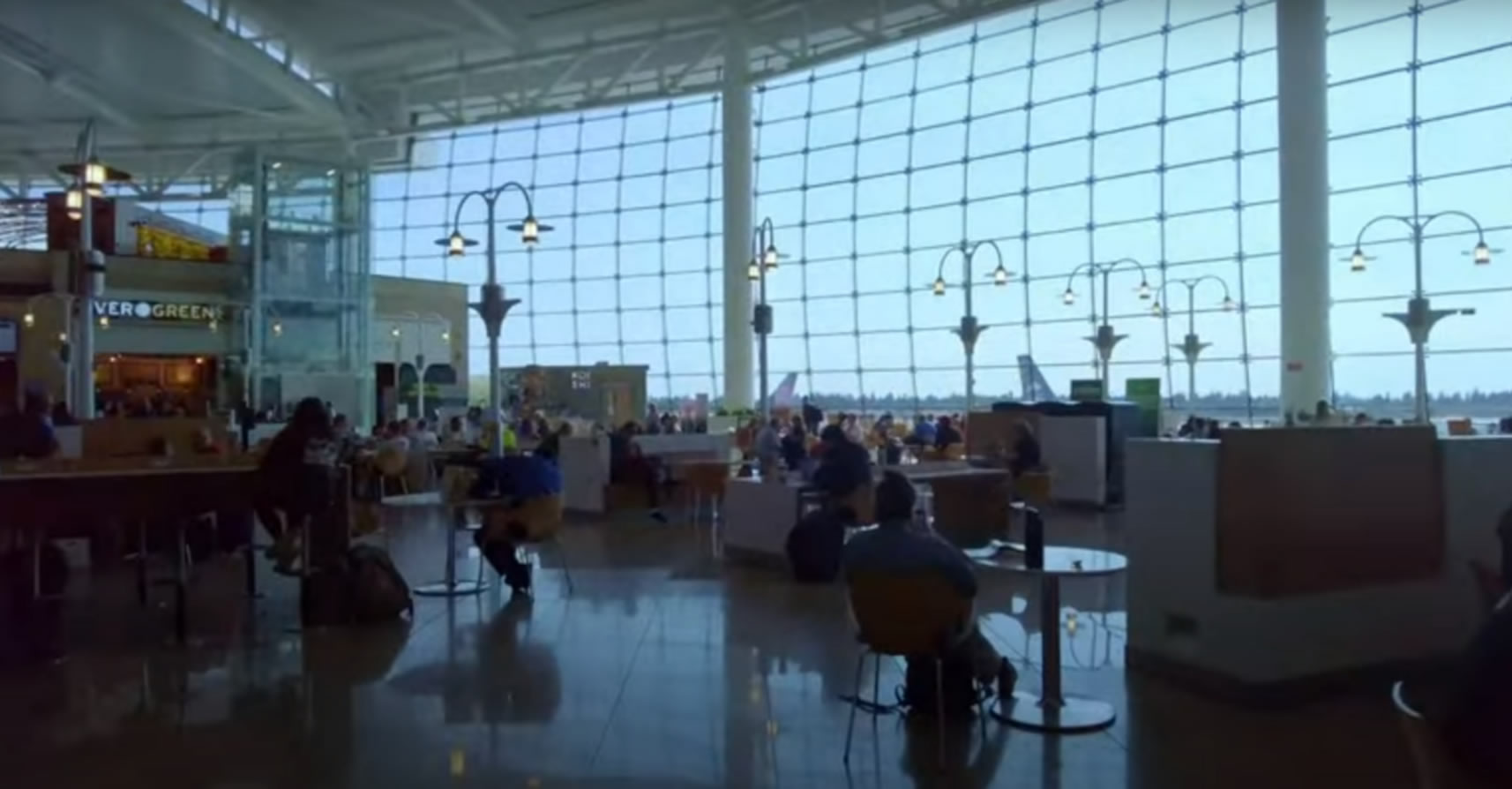
Seattle–Tacoma International Airport (SEA), commonly known as SeaTac, is the main gateway to the U.S. Pacific Northwest. It serves as a major hub for flights to Alaska and a key connecting point for transpacific routes to Asia, while offering an extensive network of domestic and international services.
Official Website: portseattle.org/sea-tac
Information Phone: +1 206 787 5388.
Terminal
The airport features a Central Terminal and two satellite buildings: the North Satellite (N Gates) and the South Satellite (S Gates). The Central Terminal houses concourses A, B, C, and D. The entire complex operates 24 hours.
Internal Connection (SEA Underground): A free underground train system called SEA Underground links the Central Terminal with the North and South Satellites. It runs 24/7 and provides fast movement within the secure area.
Annual Passenger Traffic: 52.6 million passengers in 2024.
Information Points
Information counters are located before security in the ticketing level and after security in the terminal’s central area. In addition, the airport has a well-known team of volunteers and customer service staff—easy to spot by their uniforms—who patrol the terminal to assist travelers.
Location
The airport is located 32 km (20 miles) north from Tacoma and 19 km (12 miles) to the south of Seattle.
Parking services at Seattle Tacoma airport (SEA)
The airport features a massive centralized parking garage (one of the largest in the world under a single roof), located directly in front of the main terminal. It offers options for short- and long-term stays, with the possibility of booking online to secure lower rates.
Terminal Direct (Premium)
This is the most convenient and quickest option, but also the most expensive.
Location: Fourth floor (Floor 4) of the parking garage.
Access: Directly connected to the terminal via multiple pedestrian skybridges leading to the check-in areas and security checkpoints. Ideal for quick drop-off or pick-up without using the curbside.
General Parking
Designed for longer stays, with more affordable daily rates than the premium level.
Location: Floors 1, 2, 3, 5, 6, 7, and 8.
Note: Floors 6, 7, and 8 usually have more availability. It is recommended to take a photo of your parking space (row and color) to locate your vehicle upon return.
Over-Height Vehicles
The main garage has a maximum clearance of 6'10" (2.08 meters). Vehicles exceeding this height must use the designated “Over-Height Parking” area.
Access: Enter through the usual toll plaza and follow the signage marked “Over-Height” toward the outdoor designated lot, located a short walking distance from the terminal.
Additional Services
Electric Vehicles (EV): The airport offers free Level 1 and Level 2 charging stations on a first-come, first-served basis.
- Floor 5 (General Parking): 48 spaces.
- Floor 4 (Terminal Direct): 12 spaces.
Motorcycles: Pay the same hourly/daily rate as cars and may park in any standard space. Marked corner areas are available for added convenience.
Cell Phone Lot (Free Waiting Area)
Free parking area for drivers waiting for arriving passengers to call for pickup.
Location: 2623 S. 170th Street. Located off the airport highway exit, not at the terminal curbside.
Amenities: Offers free Wi-Fi while you wait. Drivers must remain with their vehicles at all times.
Facilities for passengers with special needs
The Seattle-Tacoma International Airport (SEA) strives to be an inclusive facility, offering advanced programs for travelers with visible and invisible disabilities, as well as family-friendly amenities.
Reduced Mobility
The airport is fully accessible, featuring ramps, spacious elevators, and automated trains connecting all concourses.
Wheelchairs: The service is free but must be arranged through your airline. It is recommended to request it at least 48 hours before your flight. Although Prospect Airport Services operates the service, the request must appear in your airline reservation.
Accessible Restrooms: Accessible restrooms are available throughout the facility. SEA also features adult changing tables located in Concourse D (train level) and in the North Satellite (train level).
Invisible & Sensory Disabilities
Sunflower Lanyard Program: SEA participates in the Sunflower Lanyard program. Passengers with non-visible disabilities may request this identifier for free at the interactive information desk (located between security checkpoints 3 and 4) to signal to staff that they may need additional help or extra patience.
Sensory Room: A quiet space designed to reduce sensory stress, equipped with dimmable lighting and tactile elements.
Location: STS train level in Concourse A, near the train station.
Visual & Hearing Assistance
Aira App: The airport provides free Aira access, connecting blind or low-vision travelers with a live agent through a mobile app for real-time navigation assistance.
Hearing Technology: Hearing loops (T-coils) are available in key locations, marked with the blue ear symbol.
Families & Nursing
Nursing Rooms: Private suites and Mamava pods are available in all concourses (A, B, C, D, S, and N), offering a clean, private space with seating and power outlets.
SEA Visitor Pass: If you need to accompany an unaccompanied minor or an elderly adult to the gate but you are not flying, you may request the SEA Visitor Pass. This free pass allows non-travelers to go through security (subject to daily approval and capacity limits).
Security & TSA Cares
Passengers requiring special assistance during the security screening process can contact TSA Cares.
Recommendation: Call 72 hours before your trip to coordinate assistance or inquire about traveling with medical equipment and medications.
Request TSA Cares assistance
Latest updates: December 10, 2025
 Airports in United States