
UIOUpdated August 24, 2026

Quito airport

Quito · Ecuador

By

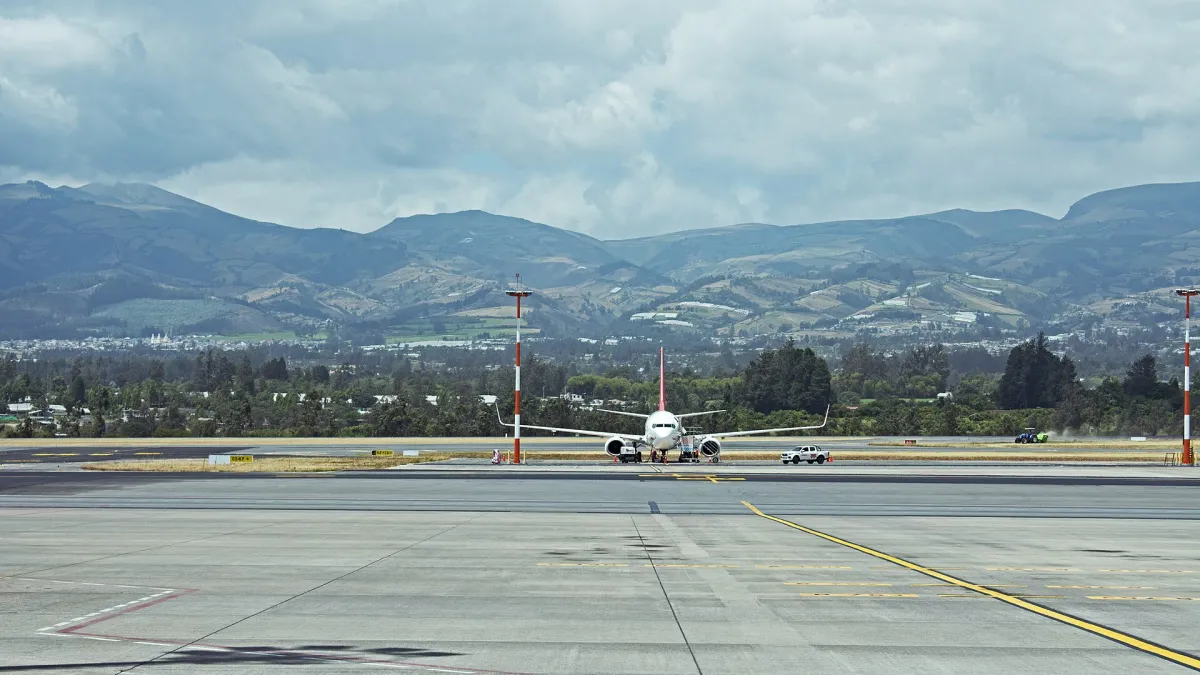
Quito airport (UIO)
Photo: Ymblanter, CC BY-SA 4.0, via Wikimedia Commons
UIO · Overview
Passengers 2024
5.4 million
From the city
25 km

About the airport

Quito airport (UIO)
Photo: Ymblanter, CC BY-SA 4.0, via Wikimedia Commons

Mariscal Sucre International Airport (UIO), opened on February 20, 2013, in the Tababela area, is the main gateway to Ecuador and one of the most modern airports in South America, having been awarded the title of Best Airport in South America by Skytrax multiple times. Its strategic location and 4,100-meter-long runway allow large-capacity aircraft to operate, connecting the city of Quito with major international hubs such as Madrid, Amsterdam, Miami, New York, Houston, Atlanta, Mexico City, Bogotá, Lima, Panama City, Buenos Aires, and Santiago de Chile.

Official Website: aeropuertoquito.aero

Phone: +593 2 395 4200 / 395 4300

Social Media:

Terminals

The airport has a single, spacious, and functional passenger terminal that remains open 24 hours a day. The building is divided into designated areas for processing both domestic and international departures and arrivals, facilitating an efficient flow of travelers.

Annual traffic (2024): 5.4 million passengers.

Information Desks

For traveler assistance, information desks are strategically located in the departure and arrival halls. These service points operate 24 hours a day, providing information about flights, airport services, and transportation.

Location

The airport is located in the town of Tababela, 25 km (16 miles) east of Quito's historic center.

Open in Google Maps

Airlines and terminals Destinations: Mexico City. Website: aeromexico.com Destinations: Coca, Cuenca, Guayaquil, Lima, Loja, Machala, Manta, Maracaibo, Panama City (Balboa), Punta Cana. Website: aeroregional.net Destinations: Montreal-Trudeau, Toronto-Pearson. Website: aircanada.com… Full guide → Getting to and from UIO Mariscal Sucre Airport is connected to the Quito metropolitan area by a network of public buses, private transfer services, authorized taxis, and ride-hailing apps. For travelers… Full guide → Car rental The car rental agency counters are located in the public area of the airport's arrivals hall. It is advisable to make a reservation in advance, especially… Full guide → Services and VIP lounges The airport offers a wide range of financial and connectivity services for travelers. The terminal features ATMs from several local banks, currency exchange offices (Global Exchange)… Full guide → Hotels and overnight stay The airport's strategic location allows travelers to rest at a first-class hotel within the airport complex itself or choose from a variety of inns and hotels… Full guide → Frequently asked questions Public buses operated by the Quito Metropolitan District connect the airport with the Río Coca (North), Quitumbe (South), and Carcelén (North) bus terminals. The fare is… Full guide →

Parking

The airport complex has spacious parking areas located in front of the terminal building and at the Quito Airport Center. All areas are monitored by security cameras 24 hours a day and offer emergency roadside assistance in the event of minor mechanical problems.

Main Parking Lot

This is the closest option to the departure and arrival entrances, making it ideal for short stays and dropping off or picking up passengers.

  • Complimentary benefit: The first 15 minutes are free, exclusively intended for the quick drop-off and pickup of passengers.
  • Hourly or partial-hour rate: USD 2.00.
  • Maximum daily rate: USD 11.00.

Covered Parking

Located in the Quito Airport Center building, this option offers protection from the weather and direct access to the terminal through pedestrian walkways. This area also includes fast-charging stations for electric vehicles.

  • Hourly or partial-hour rate: USD 3.00.
  • Maximum daily rate: USD 15.00.

Wyndham Quito Airport Parking

Located just a few meters from the terminal, it is an affordable alternative for travelers leaving their vehicles for several days. The service includes complimentary round-trip transportation to and from the airport.

  • First hour: USD 2.00.
  • Second hour: USD 3.50.
  • From 3 to 24 hours: USD 7.00.

Payment Methods

It is important to keep your entry ticket, as it is required to make payment at the automated kiosks before retrieving your vehicle. The payment machines accept cash and credit/debit cards and are located in the arrivals hall and on Level 2 of the Quito Airport Center. The service includes third-party damage and civil liability insurance within the airport complex.

Special assistance

Mariscal Sucre Airport is considered one of the most accessible airports in the region, designed to ensure smooth and safe mobility for all travelers, including people with disabilities, older adults, and pregnant women. The airport has been recognized for its commitment to accessibility: in 2024, it achieved Level 1 of ACI's Airport Accessibility Accreditation, and in January 2026, it obtained Level 2, becoming the first airport in Ecuador to achieve this distinction.

Infrastructure and Accessibility

The facilities are equipped with a range of structural features that comply with international accessibility standards:

  • Mobility: Access ramps at the main entrances, spacious elevators with raised buttons, and escalators connecting all levels of the terminal.
  • Restrooms and services: Restrooms adapted for wheelchair users and drinking fountains at accessible heights in various areas of the terminal.
  • Signage: The airport features Braille signage and tactile paving to guide people with visual impairments.
  • Parking: Reserved and properly marked spaces are available for vehicles transporting people with reduced mobility, located near the main entrances.

Assistance and Recommendations

To ensure appropriate assistance, passengers requiring special assistance (such as wheelchairs, escort services, or oxygen services) are advised to contact their airline at least 48 hours before their flight's departure.

Hidden disabilities: Quito Airport is part of the global Hidden Disabilities Sunflower program, which allows staff to identify passengers with non-visible disabilities (such as autism or hearing loss) in order to provide them with the necessary support and patience throughout airport procedures.

German Giudici

Content written by

Creator of the Aeropuertos del Mundo website network since 2007.