

Last updated: October 2026
When you arrive in another country you go through two different checks. Immigration (passport control) decides whether you can enter. Customs checks what you bring with you. They are run by different agencies, ask different questions and can cause different problems. This guide covers both.
Before you travel: the checklist
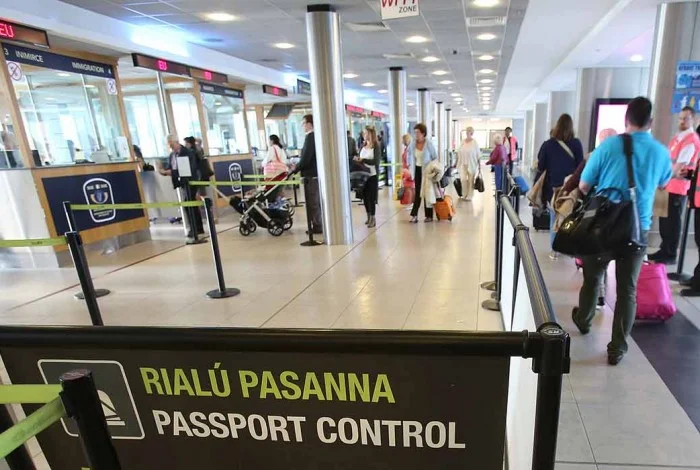
- Passport validity. Many countries require at least 6 months of validity beyond your stay; the Schengen area requires at least 3 months after the day you leave, and a passport issued within the last 10 years.
- Visa or electronic travel authorization. Even visa-free travelers often need one before boarding: ESTA for the United States, eTA for Canada, ETA for the United Kingdom, ETA for Australia. Apply only on the official government website; third-party sites charge extra.
- Europe's ETIAS. The EU's travel authorization for visa-exempt visitors is expected to start in the last quarter of 2026. Check the official ETIAS site before you travel.
- Health requirements. Some countries ask for a yellow fever vaccination certificate, especially if you come from or have passed through a risk area.
- Arrival forms. Many countries now use online arrival cards that must be filled in before landing (for example Japan's Visit Japan Web, Singapore's SG Arrival Card, Thailand's TDAC).
- Return or onward ticket, accommodation and proof of funds. Have them on your phone and, ideally, on paper too.
Immigration control
How it works today
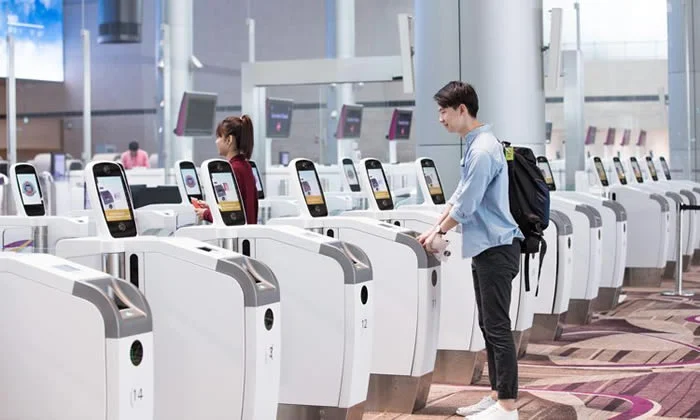
More and more airports use biometric checks: facial recognition, fingerprints and automatic e-gates.
- European Union (EES). Since 10 April 2026 the Entry/Exit System records non-EU travelers' face and fingerprints on their first entry and replaces passport stamps. The first registration takes longer; later trips are faster.
- United States. CBP takes your photo and, on first entry, your fingerprints. Eligible travelers can use the free Mobile Passport Control app, and frequent travelers can apply for Global Entry.
- E-gates. In the UK, the EU, Australia and other countries, holders of certain passports can use automatic gates. Check the signs: not all nationalities are eligible, and children often must use the staffed desks.
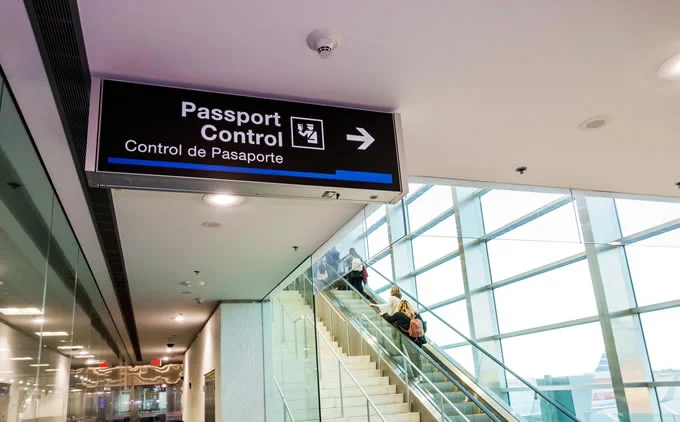
Questions you are usually asked
- What is the purpose of your trip?
- How long are you staying, and where?
- What do you do for a living?
- Do you have a return ticket?
- How much money do you have, or how will you pay for your stay?
- Do you know anyone here?
Answer briefly, clearly and truthfully. Your answers must match your documents: if your visa or authorization is for tourism, do not say you are coming to work or look for a job.
Tips
- Keep passport, authorization, hotel booking and return ticket together and easy to reach.
- Remove sunglasses, hats and headphones at the desk and at the e-gates.
- Do not use your phone in the immigration hall; it is forbidden in many countries.
- Never lie or hide previous refusals. Being caught can mean a ban that lasts years.
- If you do not understand a question, ask for it to be repeated or for an interpreter.
If you are sent to secondary inspection
It is common and does not always mean a problem: it may be a random check or a document to verify. Stay calm, answer the questions and follow the instructions. If you are refused entry, ask for the decision and the reason in writing, and contact your consulate if needed.
Traveling with minors
Children traveling with only one parent, or with other adults, often need a notarized parental consent letter. Some countries, such as South Africa and many in Latin America, are strict about it. Check the rules of both the departure and destination countries.
Customs control
After collecting your bags you go through customs. Many airports use two channels:
- Green channel: "Nothing to declare." Only if everything you carry is within the allowances.
- Red channel: "Goods to declare." If you carry goods above the allowance, restricted items or large amounts of cash.
- In the EU there is also a blue channel for passengers arriving from another EU country.
In the United States there are no channels: you answer the customs questions at the CBP kiosk or desk, or in the Mobile Passport Control app.
What you must declare
- Cash. €10,000 or more when entering or leaving the EU, and US$10,000 or more when entering or leaving the United States, including traveler's checks and similar instruments. Many other countries set their own limits. Carrying cash is legal; failing to declare it can mean seizure and fines.
- Goods above the duty-free allowance. For example, travelers arriving in the EU by air can bring up to €430 in goods duty-free (€150 for children under 15 in some countries); US residents returning home usually have an US$800 exemption.
- Alcohol and tobacco above the limits. In the EU, for example, 1 liter of spirits and 200 cigarettes per adult from outside the EU.
- Food, plants and animal products. Fresh fruit and vegetables, meat, dairy, eggs, seeds and plants are restricted or banned in many countries. Commercially packaged, sealed products are more often accepted than homemade or loose food, but not always: the EU, for example, bans meat and dairy products from outside the EU even if sealed. Australia, New Zealand, Chile and the United States are very strict and fine undeclared food on the spot.
- Medicines. Carry them in their original packaging with the prescription. Some common medicines, such as strong painkillers and ADHD medication, are controlled in countries like Japan or the UAE and may need a permit.
Customs tips
- If in doubt, declare. Declaring something allowed costs nothing; not declaring something restricted can mean a fine.
- Keep receipts for expensive items you bought abroad, and proof of purchase for valuable items you took from home (cameras, laptops, jewelry).
- Duty-free shopping at the departure airport does not exempt you from the allowances at your destination.
- Never carry bags or packages for other people.
Official sources
- European Union – EES and ETIAS (Travel to Europe)
- European Commission – Customs allowances for travelers
- US Customs and Border Protection – Travel
- UK Visas and Immigration
- IATA Travel Centre – Passport, visa and health requirements by country
This guide is general information. Entry and customs rules change often and depend on your nationality; check the official sources of your destination before you travel.